Website Builder vs. Web Designer for Small Business
If you've started looking into getting your business online, you've probably hit the same fork in the road every small business owner hits: do you build it yourself with a tool like Wix, Squarespace, or GoDaddy, or do you hire someone to build it for you?
Both options can get you a working website. That's not really the question. The real question is what kind of website you need, what you're willing to spend time on, and what happens after the site goes live. This isn't about which option is "better" — it's about which one fits your business right now.
Here's an honest breakdown of both sides, so you can make that call with your eyes open.
What DIY website builders are good at
Tools like Wix, Squarespace, and GoDaddy exist for a reason, and that reason is real: they let almost anyone get a website online without writing a line of code.
You pick a template, drag in your photos and text, and within a few hours you've got a live website with your business name, hours, services, and contact info. For a brand-new business or someone who just needs a basic online presence, that's genuinely useful. It's fast, it's affordable, and it puts something on the internet where there was nothing before.
These platforms have also gotten better over the years. The templates look cleaner than they used to, most are mobile-friendly out of the box, and basic features like contact forms or a photo gallery are usually built in and easy to set up.
So if your goal is "have a website that exists," a builder can check that box.
Where DIY builders start to run into limits
The tradeoffs show up once your website needs to do more than just exist — when it needs to actively bring in customers and represent your business the way you want it represented.
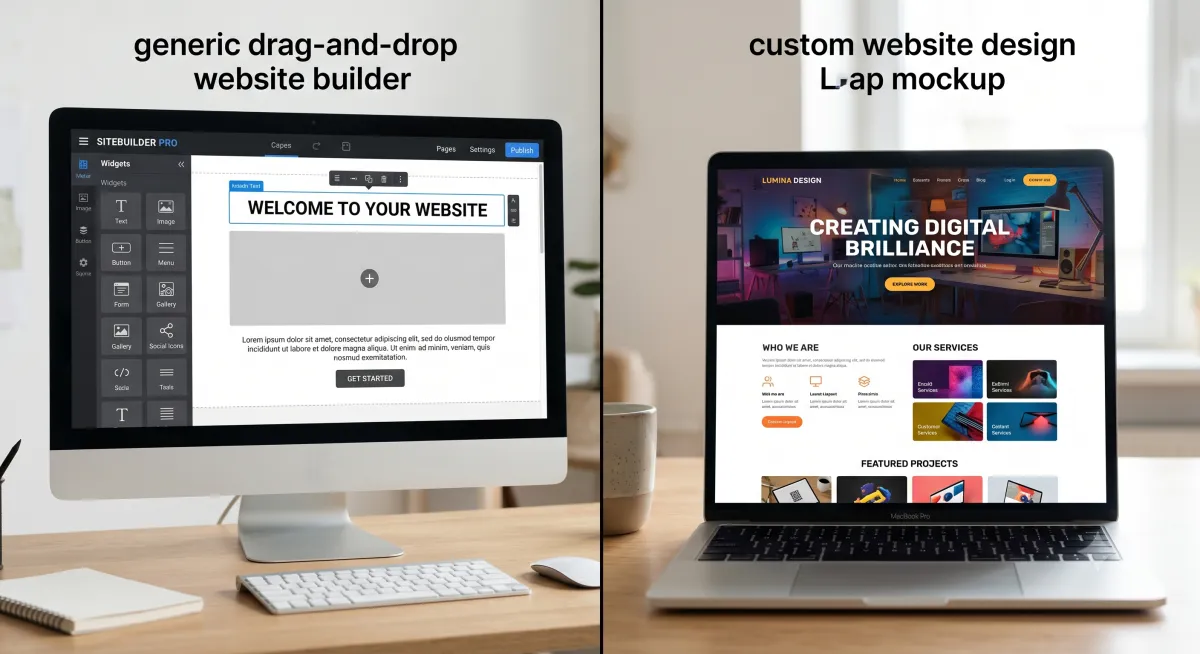
Customization. Templates are built to work for thousands of businesses at once, which means they're designed to be generic. You can change colors, swap photos, and rearrange a few sections, but the underlying layout and structure stay the same as everyone else using that template. If your competitor down the street picked the same template (and there's a decent chance they did), your sites might end up looking more alike than you'd want.
SEO control. This is the one that catches a lot of business owners off guard. DIY builders give you some SEO settings — page titles, meta descriptions, that kind of thing — but the platform itself controls a lot of what happens under the hood: how fast pages load, how the site's code is structured, how easily Google can crawl and understand your pages. You can optimize what the platform lets you optimize, but you can't go past that ceiling. For a business competing in local search results, that ceiling matters more than it seems like it should.
Ongoing support. When something breaks on a DIY site — a layout shifts after an update, a plugin stops working, a page suddenly looks wrong on mobile — that's on you to fix. Some platforms have support chat, but they're supporting the platform, not your specific site. If you don't have the time or the technical comfort to troubleshoot it yourself, those small issues can sit unresolved for weeks, sometimes without you even noticing.
None of this means DIY builders are bad. It means they come with a ceiling, and for some businesses that ceiling is fine. For others, it's the thing standing between them and getting found by new customers.
What a custom-built site offers instead
A custom-built website starts from a different place. Instead of starting with a template and fitting your business into it, the site is built around your business — your services, your customers, and what you're trying to get them to do.
Tailored design. Your site looks like your business, not like a template with your logo swapped in. That matters more than it might seem — when a potential customer lands on a site that looks like every other business they've seen today, it doesn't build much confidence. A site that looks intentional, built specifically for what you do, signals that you take your business seriously.
SEO foundations from day one. Instead of working within a platform's built-in limits, a custom site is structured for search from the ground up — proper page structure, clean code, fast-loading pages, and the on-page elements that help Google understand what your business does and where you do it. For a business trying to show up when someone nearby searches for your services, this is the foundation everything else builds on.
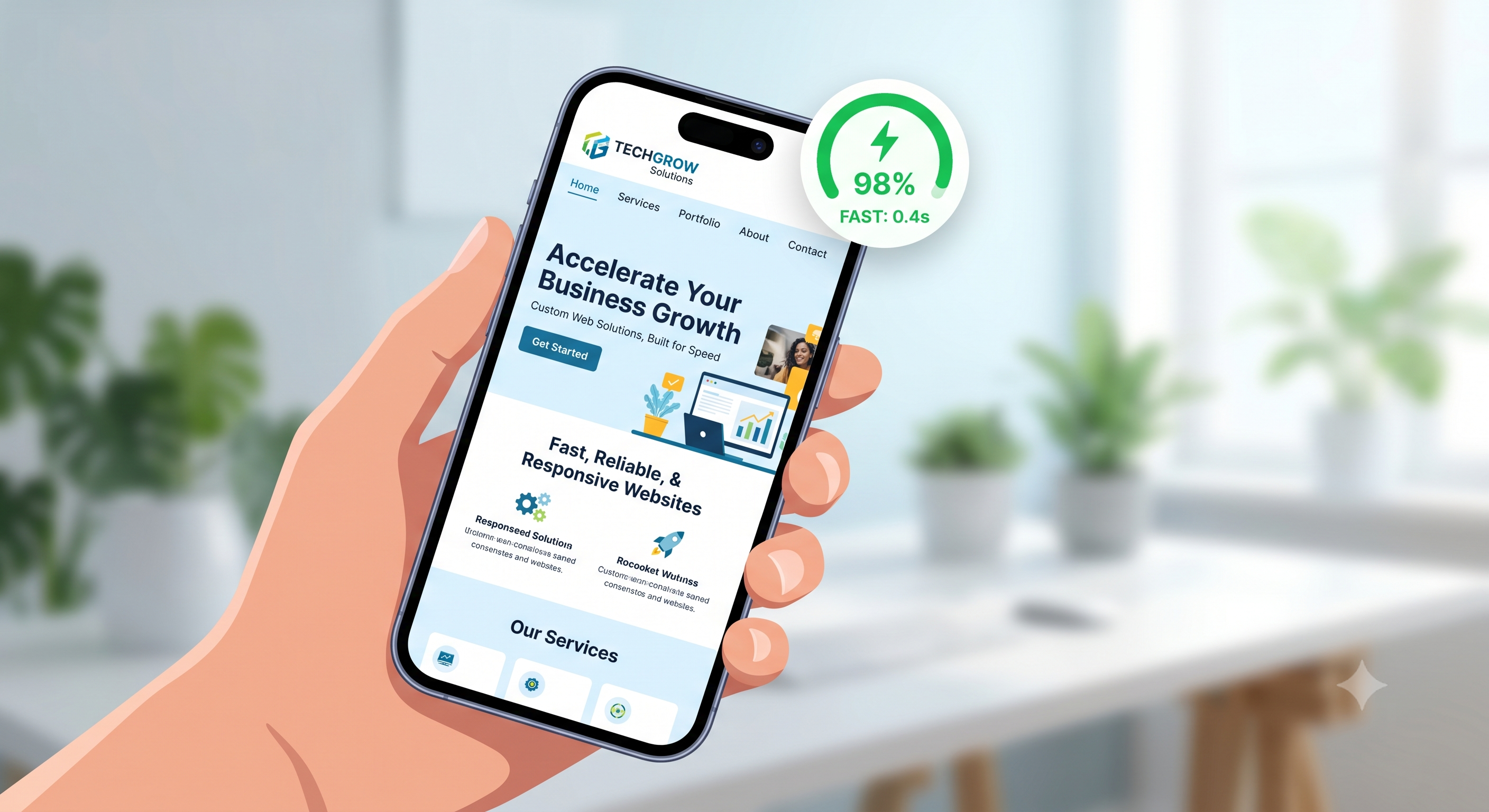
Faster load times. Page speed affects two things: whether Google ranks you well, and whether visitors stick around. DIY builders load a lot of platform code behind the scenes to power their drag-and-drop editors, even after your site is live. A custom-built site doesn't carry that extra weight, so pages load faster — which keeps visitors from bouncing before they even see what you offer.
Ongoing management. With a custom site through an agency, someone else is watching for the small things — broken links, outdated info, things that need updating as your business changes. You're not the one responsible for noticing when something's off or figuring out how to fix it.
The tradeoff is straightforward: you're paying for someone else to handle the technical side, the design decisions, and the upkeep, so you can focus on running your business.
A simple way to decide
Here's a framework that cuts through most of the back-and-forth.
DIY can work well if: you have the time to build and maintain the site yourself, you're comfortable enough with basic design and tech to troubleshoot when something looks off, and your site's job is mainly to exist — a digital business card with your hours, services, and contact info. If that's your situation, a builder can absolutely get you there, and there's no shame in starting that way.
Hiring a designer or agency makes more sense if: you want your website to actively help you get found in local search, you don't have the time (or interest) to keep tinkering with it, or you've tried the DIY route and it's not delivering the results you hoped for. If your website is meant to bring in business — not just represent it — that's when the gap between a template and a custom build starts to show up in real numbers: calls, form fills, and customers who found you instead of a competitor.
There's no wrong answer here. The mistake is picking based on price alone without thinking about what you actually need the website to do for your business over the next year or two.
What this looks like with Velocity Designs
If you decide a custom-built site is the right move, custom website projects with Velocity Designs start at $1,000 — and that includes the SEO foundations, mobile-responsive design, and ongoing support that DIY builders leave on your plate.
We build sites around what your customers are searching for and what makes them pick up the phone or fill out a form — not a template that looks the same as the business down the street. Head over to our web design page to see how we approach builds, or get in touch if you want to talk through what your business actually needs before deciding anything.
Whatever you choose, the goal is the same: a website that works for your business, not just one that exists.