
Speed to Lead for Small Business | Velocity
Picture a homeowner with a burst pipe. They don't call one plumber — they pull up Google, find three or four, and reach out to all of them within the same ten minutes. Whoever calls back first, quite often, gets the job. Not the best plumber. Not the cheapest one. The fastest one to respond.
That's speed to lead, and it's one of the most underrated factors in whether a small business wins new customers or watches them go to a competitor. It has nothing to do with the quality of your work and everything to do with how quickly you show up once someone raises their hand.
The gap between how fast you respond and how fast you should
Lead-response research generally points in the same direction: waiting makes it harder to reach a person who is actively comparing options. The exact cutoff and conversion difference vary by industry, lead source, and what the customer needs, so treat a five-minute target as an operating goal to test, not a universal promise.
Now compare that to how most small businesses actually operate. A form comes in overnight and doesn't get seen until the owner checks email the next morning. A call comes in during a job and goes to voicemail, with a callback happening whenever there's a free moment — sometimes hours later. None of this is because the business doesn't care. It's because responding fast, every time, without exception, is genuinely hard to do when you're also the one out doing the work.
The businesses that consistently win the fastest-response game usually aren't working harder than everyone else. They've just closed the gap between when a lead comes in and when a real response goes out.
What slow response actually costs
The cost isn't abstract — it's leads that reached out, wanted to buy, and went with whoever got back to them first. Every hour a lead sits unanswered is an hour they might be filling out that same form on a competitor's site.
It also compounds. A slow response doesn't just risk losing that one job — it shapes the customer's first impression before you've even spoken. Someone who waits a day for a callback starts to wonder if that's a preview of what working with you will be like. Someone who gets a response in minutes assumes you're organized, responsive, and easy to work with, before you've done a single thing to prove it.
Closing the gap with automated follow-up
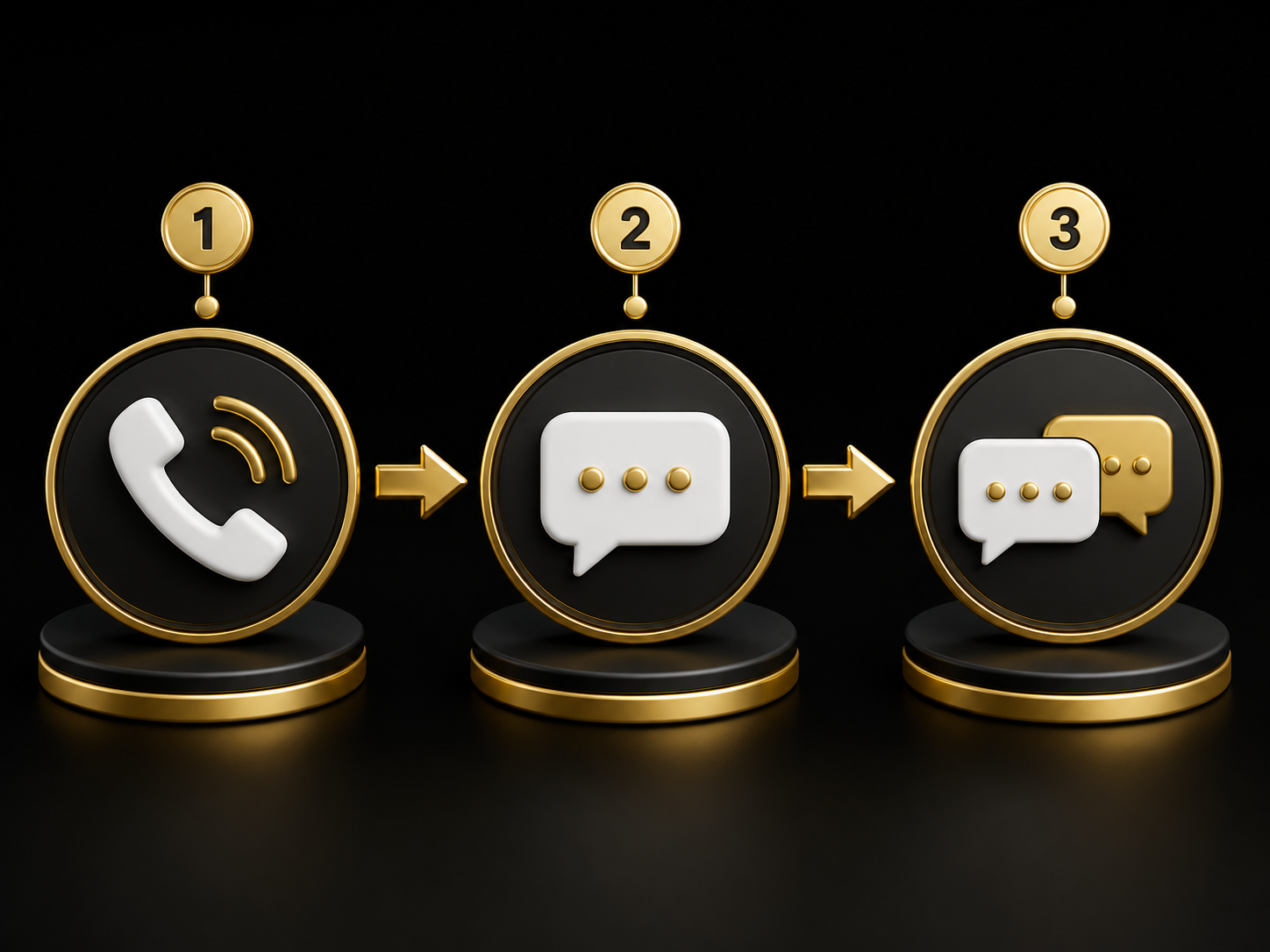
The fix isn't necessarily "answer every call yourself, every time" — that's not realistic for a business owner who's also on job sites or with other customers. The fix is making sure something responds immediately, even when you can't.
This is where automated follow-up can help. A missed call can trigger an immediate text message confirming that the business received the call. A webchat widget can collect basic details after hours. An AI voice receptionist can answer approved routine questions and gather information before handing the call to a person. Each tool covers a different part of the gap.
None of this replaces you talking to the customer eventually. It just makes sure nobody is left waiting in silence during the window when they're most likely to give up and call the next name on their list.
What good speed to lead looks like
Set a response target your team can actually keep, then make sure a lead receives an acknowledgment when nobody can respond personally. That may be an automatic text, a voice assistant, or a webchat conversation that collects details. Measure how long it takes a person to take over and how many inquiries turn into real conversations.
Small businesses that get this right aren't necessarily better at the actual work than their competitors. They've just made sure speed isn't left up to chance.
Where to start
If you're not sure how fast your business responds now, test it. Call your own number, fill out your own contact form, and record when the first acknowledgment and the first human reply arrive. That baseline tells you what actually needs fixing.
Missed-call text-back is included in every Velocity monthly plan. AI phone tools and webchat can cover other parts of the response flow. Check the pricing page for the current breakdown, or get in touch to map the simplest setup for your calls.